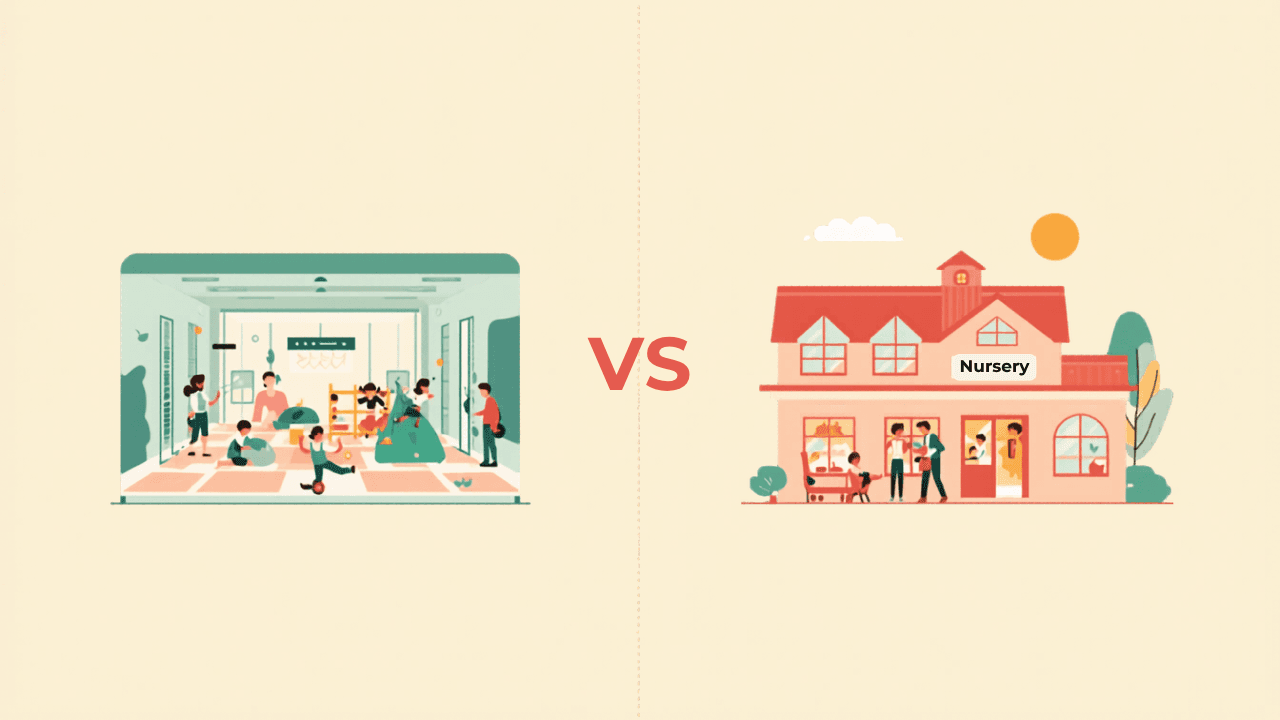
If you’ve been searching for “crèche near me” or wondering about the difference between a crèche and a nursery, you’re not alone. Many parents find the terminology confusing, especially when trying to work out which type of childcare best suits their family’s needs.
This guide explains what a crèche is, how it differs from a nursery, and when each option might be the right choice for your child.
What Is a Crèche?
A crèche (sometimes spelled “creche” without the accent) is a short-term childcare facility that looks after children for a few hours at a time whilst parents are otherwise occupied. The term comes from the French word meaning “manger” or “crib”.
Unlike nurseries, which provide regular, structured childcare, crèches typically operate on a drop-in basis. You don’t usually need to book sessions weeks in advance — you simply turn up when you need care.
Crèches are commonly found in:
- Workplaces — Large employers often provide on-site crèches for staff
- Gyms and leisure centres — Allowing parents to exercise whilst children are supervised
- Shopping centres — Offering short-term care whilst parents shop
- Hotels and conference centres — Providing childcare during events, weddings, or conferences
- Airports — Some major UK airports offer crèche facilities for travelling families
The key characteristic of a crèche is flexibility and short duration — typically 1-3 hours of care at a time.
Crèche vs Nursery: Key Differences
Whilst both crèches and nurseries provide childcare for young children, they serve different purposes and operate in fundamentally different ways.
| Feature | Crèche | Nursery |
|---|---|---|
| Hours | Short sessions (1-3 hours) | Half-day or full-day (4-10 hours) |
| Booking | Usually drop-in, no advance booking | Pre-booked regular sessions |
| Age range | Typically 6 months - 5 years | 3 months - 5 years (most) |
| Curriculum | Informal play activities | Structured EYFS curriculum |
| Ofsted registration | Only if caring for 2+ hours | Always registered and inspected |
| Cost | £3-10 per session | £40-80 per day |
| Staff ratios | Same as nurseries (if registered) | 1:3 (under 2s), 1:4 (2-year-olds), 1:8 (3-4s) |
| Meals | Snacks only | Full meals and snacks |
| Flexibility | Very flexible, ad-hoc use | Fixed sessions, term-time or all-year |
Hours and Flexibility
Nurseries operate on fixed sessions — you book specific days and times (e.g., Monday and Wednesday 8am-6pm). You pay for these slots whether you use them or not.
Crèches offer much greater flexibility. You can drop in when needed without regular commitment. This makes crèches ideal for parents with irregular schedules or those who only need occasional childcare.
Structure and Education
Nurseries follow the Early Years Foundation Stage (EYFS) curriculum, with planned activities designed to support child development. Staff track progress and prepare children for school.
Crèches provide supervised play in a safe environment, but without the same educational structure. Activities are informal and focused on entertainment rather than developmental goals.
Cost Comparison
On an hourly basis, crèches appear cheaper. A gym crèche might charge £5 for two hours (£2.50/hour), whilst a nursery costs £6-8/hour.
However, for regular care, nurseries often work out more economical. If you need 20 hours per week, a nursery’s weekly rate is typically cheaper than paying for 20 individual crèche hours. Use our childcare cost calculator to compare options based on your specific needs.
Registration and Inspection
This is a crucial difference. All nurseries must be registered with Ofsted and undergo regular inspections to maintain standards.
Crèches that care for children for more than 2 hours at a time must also register with Ofsted. However, crèches providing less than 2 hours of care are exempt from registration. This means:
- Gym crèches (typically 1-2 hours) often aren’t Ofsted-registered
- Shopping centre crèches may not be inspected
- Workplace crèches usually are registered if they offer longer sessions
Unregistered crèches aren’t necessarily unsafe, but they don’t undergo the same scrutiny as registered settings. Parents should ask about staff qualifications, DBS checks, and safety procedures.
Types of Crèches in the UK
Workplace Crèches
Many large employers, particularly hospitals, universities, and corporations, provide on-site crèches for employees. These may operate as full nurseries with longer hours, or offer more flexible drop-in care.
Advantages:
- Often subsidised or free for staff
- Convenient location near your workplace
- Allows parents to visit during breaks
- May accept babies from 3 months
Disadvantages:
- Limited to employees of specific organisations
- May have waiting lists
- Less useful if you don’t work regular hours
Gym and Leisure Centre Crèches
Most large gyms and leisure centres offer crèche facilities, allowing members to exercise whilst children are supervised. Sessions typically last 1-2 hours.
Advantages:
- Convenient for parents who exercise regularly
- Usually included in membership or charged per session
- No advance booking required
- Good for socialising children
Disadvantages:
- Very short sessions (1-2 hours maximum)
- Not suitable as regular childcare
- May not accept very young babies
- Can be busy during peak times
Shopping Centre Crèches
Some larger shopping centres provide crèche facilities, though these are becoming less common in the UK. Sessions are usually limited to 2-3 hours.
Advantages:
- Allows guilt-free shopping time
- Children entertained whilst you browse
- Pay-as-you-go pricing
Disadvantages:
- Can be expensive per hour
- Not available in most shopping centres
- Quality varies significantly
- Staff may not be highly qualified
Hotel and Conference Crèches
Hotels hosting weddings, conferences, or events sometimes provide temporary crèche facilities for guests’ children.
Advantages:
- Allows parents to attend events
- Supervised by qualified staff
- Often provided free for hotel guests
Disadvantages:
- Only available during specific events
- Unfamiliar environment for children
- May not meet regular childcare needs
When a Crèche Is the Right Choice
A crèche works well if you:
- Need occasional, short-term childcare rather than regular care
- Have an irregular schedule that makes booked nursery sessions impractical
- Want to exercise at the gym whilst your child is supervised
- Work somewhere with a subsidised workplace crèche
- Need childcare for specific events (weddings, appointments)
- Want to give your child social interaction without committing to regular sessions
- Have a partner with flexible hours who can manage most childcare
Crèches are particularly useful for parents on maternity/paternity leave who want occasional breaks, or those working part-time with variable hours.
When a Nursery Is the Better Option
Consider a nursery if you:
- Need regular, consistent childcare for work
- Want a structured learning environment for your child
- Require full-day or half-day sessions (4+ hours)
- Need care 5 days per week or more
- Want your child to be prepared for school
- Require meals and naps to be provided
- Value Ofsted inspection and regulatory oversight
- Need care during specific hours that align with your work
For most working parents, a nursery or childminder provides more suitable care than a crèche. The regular routine benefits children, and the cost per hour is usually lower for full-time care.
Finding Crèches Near You
Unlike nurseries, crèches aren’t listed in centralised directories. To find a crèche near you:
- Check your workplace — Ask HR if there’s an on-site crèche or childcare benefit
- Visit local gyms — Most large chains (David Lloyd, Virgin Active, Nuffield Health) offer crèche facilities
- Contact shopping centres — Ring customer services to ask about childcare facilities
- Search online — Try “workplace crèche [your area]” or “gym crèche [your town]”
- Ask other parents — Local parent groups often know about lesser-known crèche facilities
For regular childcare needs, search for nurseries near you using our directory. You can filter by location, Ofsted rating, fees, and facilities to find the perfect match.
Making Your Decision
The choice between a crèche and nursery isn’t always either/or. Many families use both:
- A nursery for regular weekly care
- A gym crèche for weekend exercise sessions
- A workplace crèche for occasional days when nursery is closed
Consider these questions:
How many hours per week do you need childcare? If it’s more than 10-15 hours, a nursery is usually more practical and economical.
Do you need the same days each week? Regular patterns suit nurseries. Variable schedules suit crèches.
How important is educational content? If you want structured learning, choose a nursery. For simple supervision, a crèche may suffice.
What’s your budget? Calculate the total weekly cost, not just the hourly rate. Our childcare cost calculator can help you compare options.
Is Ofsted registration important to you? If yes, choose a nursery or ensure any crèche you use is registered.
Next Steps
Understanding the difference between crèches and nurseries helps you make an informed decision about childcare. For most families needing regular care, a nursery provides better value, structure, and peace of mind.
Ready to find nurseries in your area? Search our directory of UK nurseries, filter by your requirements, and read parent reviews to make the best choice for your child.
If you’re still weighing up different childcare options, read our guide on nursery vs childminder or learn how to choose the right nursery for your family.
Frequently Asked Questions
- What is a crèche?
- A crèche is a short-term childcare facility that looks after children for a few hours at a time, typically whilst parents are working, exercising, shopping, or attending an event. Unlike nurseries, crèches usually don't require advance booking and operate on a drop-in basis.
- What is the difference between a crèche and a nursery?
- The main difference is duration and structure. Nurseries provide full-day or half-day care with booked sessions, a structured curriculum, and meals. Crèches offer short-term care (usually 1-3 hours) on a drop-in basis, often in gyms, workplaces, or shopping centres, with less formal activities.
- Do crèches need to be registered with Ofsted?
- Yes, if a crèche cares for children under 8 for more than 2 hours per day, it must register with Ofsted. However, crèches providing care for less than 2 hours at a time may be exempt from registration, though many choose to register voluntarily for quality assurance.
- How much does a crèche cost?
- Crèche costs vary by type and location. Workplace crèches are often subsidised or free for employees. Gym crèches typically cost £3-8 per session. Shopping centre crèches charge around £5-10 per hour. This is generally cheaper than nursery care on an hourly basis.
- Can I use a crèche every day?
- Whilst you can technically use a crèche daily, they're designed for occasional, short-term care rather than regular childcare. For consistent daily care, a nursery or childminder is more appropriate and often more cost-effective.
- What age children can go to a crèche?
- Most crèches accept children from 6 months to 5 years, though some workplace crèches may take babies as young as 3 months. Each crèche sets its own age limits, so check with individual facilities.
- Are crèches as safe as nurseries?
- Registered crèches must meet the same Ofsted safety and staff ratio requirements as nurseries. However, unregistered crèches (those providing less than 2 hours care) aren't inspected by Ofsted, so parents should check qualifications and safety measures independently.
Related Tools
Related Articles
How to Apply for a Nursery Place in the UK (2026)
How to apply for a nursery place in the UK — when to start looking, how waiting lists work, and what you need for your application.
Read moreUK Nursery Chains: Comparing the Biggest Nursery Groups (2026)
Compare the UK's largest nursery chains including Busy Bees, Bright Horizons, Monkey Puzzle, and more. Find the right nursery group for your family.
Read moreBright Horizons Nursery: Overview, Fees & How to Compare Alternatives (2026)
Explore Bright Horizons nurseries and discover how to compare alternatives. Find local nurseries with similar quality at different price points.
Read moreFind the Perfect Nursery
Search thousands of nurseries across England and Scotland, compare ratings, and read verified parent reviews.