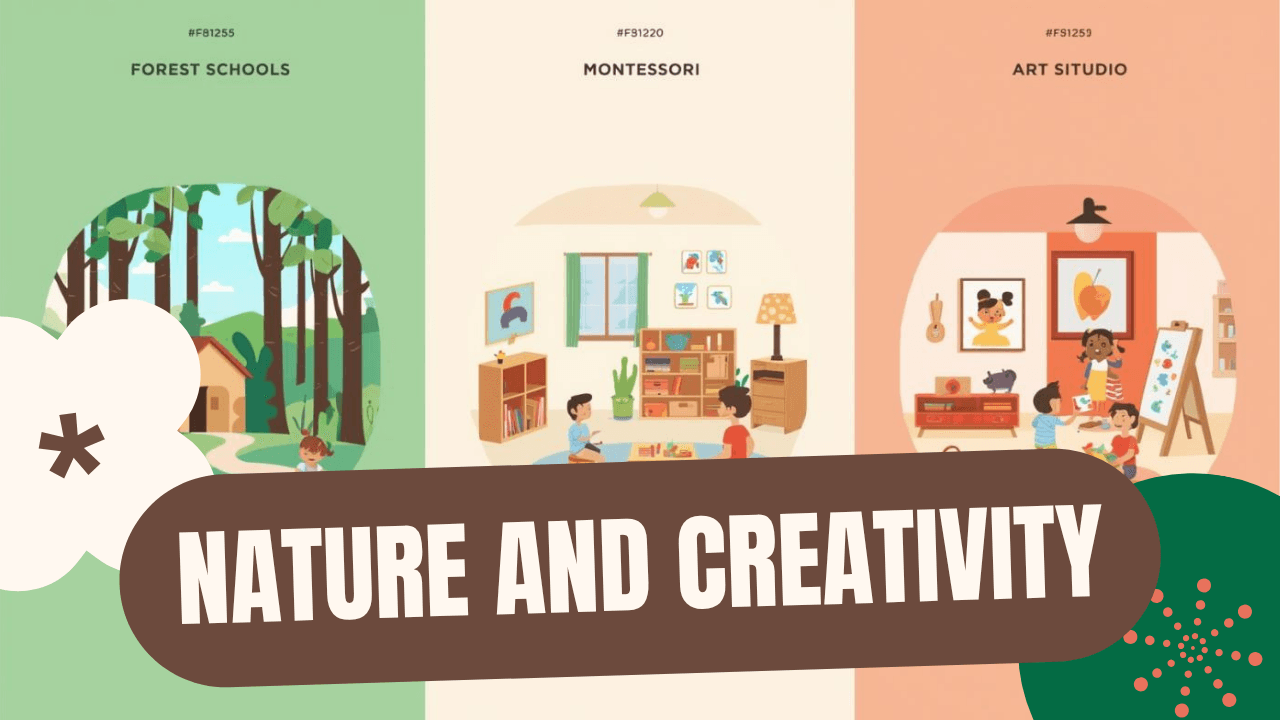
What is Montessori?
If you have been looking into nurseries, you have almost certainly come across the term “Montessori.” It is one of the most widely recognised approaches to early years education in the world, and there are hundreds of Montessori nurseries and preschools across the UK.
But what does Montessori actually mean in practice? Is it just a label, or does it genuinely change what your child’s day looks like? And how do you tell a truly Montessori nursery from one that simply borrows the name?
This guide explains everything you need to know — from the core principles of the Montessori method, to what a typical day looks like, how costs compare, and what to check when visiting a Montessori nursery.
What Is a Montessori Nursery?
A Montessori nursery is a childcare and education setting that follows the philosophy developed by Dr Maria Montessori, an Italian physician and educator, in the early 1900s. Her approach was based on careful observation of how children naturally learn and develop.
The core idea is straightforward: children learn best when they are free to choose what interests them, work at their own pace, and use hands-on materials in an environment designed specifically for their developmental stage.
In practice, a Montessori nursery looks and feels different from a traditional setting. You will notice:
- Child-led learning — Children choose their own activities from a range of options set out by the teacher. There is no single lesson that every child does at the same time.
- A prepared environment — The classroom is carefully arranged with child-sized furniture, open shelving at the children’s height, and specific Montessori learning materials. Everything has a place, and children are taught to return materials when they are finished.
- Mixed-age groups — Most Montessori classrooms group children across a 3-year age span (for example, 3 to 6 year olds together). Younger children learn from older ones, and older children reinforce their own understanding by helping younger peers.
- Uninterrupted work periods — Children are given long blocks of time (typically 2 to 3 hours) to work on their chosen activities without being asked to stop and move on to something else.
- Trained Montessori staff — Practitioners hold Montessori-specific qualifications alongside standard early years qualifications. Their role is to guide and observe rather than to direct.
The Montessori Method Explained
The Montessori method is built around five key principles that shape everything from how the classroom is set up to how adults interact with children.
1. Respect for the child
Montessori treats children as capable, curious individuals. Adults observe rather than direct, stepping in to offer help when needed but giving children space to try things independently. This builds confidence and self-reliance from a young age.
2. The absorbent mind
Montessori recognised that children under 6 absorb information from their environment effortlessly — language, culture, social norms, and practical skills. The nursery environment is designed to take advantage of this natural capacity by surrounding children with rich, purposeful learning opportunities.
3. Sensitive periods
Children go through windows of time when they are particularly receptive to learning specific skills — for example, language, order, movement, or sensory refinement. Montessori practitioners are trained to recognise these sensitive periods and ensure the right materials and activities are available at the right time.
4. The prepared environment
Every element of a Montessori classroom is intentional. Materials are arranged on open shelves in a logical sequence. There is order and beauty in the space. Children can access everything independently, which fosters autonomy and decision-making.
5. Auto-education (self-education)
Montessori materials are designed so that children can discover concepts through their own exploration. Many materials are self-correcting — for example, puzzle maps where pieces only fit in the right place, or bead chains that make abstract numbers tangible. Children learn through repetition and hands-on experience rather than being told the answer.
What Does a Day at a Montessori Nursery Look Like?
While every nursery is different, a typical day at a Montessori setting follows a recognisable pattern:
Morning arrival (08:00 - 09:00) Children arrive and settle in. They may greet friends, put away their belongings, and choose their first activity.
Morning work cycle (09:00 - 11:30) This is the core of the Montessori day — a long, uninterrupted work period. Children choose from activities across five key areas:
- Practical life — pouring, threading, buttoning, food preparation, cleaning. These build fine motor skills, concentration, and independence.
- Sensorial — materials that refine the senses: grading colours, comparing textures, distinguishing sounds, ordering by size.
- Language — sandpaper letters, moveable alphabets, phonics activities, storytelling, and early reading and writing.
- Mathematics — number rods, bead chains, spindle boxes, and golden bead materials that make abstract concepts concrete.
- Cultural studies — geography (puzzle maps, globes), science (nature study, simple experiments), art, and music.
A practitioner may give a short individual or small-group lesson to introduce a new material, but most of the time children work independently or in self-chosen pairs.
Circle time and snack (11:30 - 12:00) A brief group gathering for songs, stories, or group discussion. Snack time is often “rolling” — children serve themselves when they are ready, rather than everyone stopping at once.
Lunch and outdoor play (12:00 - 13:30) Children eat together (often helping to set the table and clear up) and spend time outdoors. Montessori nurseries value outdoor learning and many extend the classroom into a garden or outdoor area.
Afternoon (13:30 - 15:30) Younger children may nap. Older children continue with activities, often choosing more creative or collaborative work in the afternoon — art, construction, gardening, or cooking.
Home time (15:30 - 18:00) Pick-up times vary. Extended-day settings may offer an afternoon snack and a quieter period of free play.
Montessori vs Traditional Nursery
Understanding how a Montessori nursery compares with a more traditional setting can help you decide what suits your child.
| Aspect | Montessori nursery | Traditional nursery |
|---|---|---|
| Learning style | Child-led — children choose their own activities | Adult-directed — activities are planned and led by staff |
| Curriculum | EYFS delivered through Montessori materials and methods | EYFS delivered through themed topics and group activities |
| Age groups | Mixed ages (typically 3-year span) | Children grouped by age |
| Daily structure | Long uninterrupted work periods (2-3 hours) | Shorter activity sessions with regular transitions |
| Role of adult | Guide and observer — facilitates rather than directs | Teacher — plans and leads activities |
| Learning materials | Specific Montessori materials (self-correcting, hands-on) | Varied resources — craft supplies, toys, role play equipment |
| Assessment | Observation-based, individual progress records | Observation-based with developmental milestones |
| Classroom feel | Calm, ordered, quiet concentration | More social, energetic, group-focused |
| Outdoor time | Valued, often integrated into the learning day | Dedicated outdoor play sessions |
| Creativity | Structured creative activities alongside free exploration | Free creative expression through art, music, role play |
It is worth noting that many traditional nurseries borrow elements from Montessori — such as child-led play, sensory activities, and mixed-age free flow time. The boundaries are not always rigid.
Is Montessori Right for Your Child?
No single approach is perfect for every child. Here is an honest look at who tends to thrive in a Montessori environment — and who might find it more challenging.
Children who often do well in Montessori
- Self-motivated learners — Children who enjoy exploring independently and can focus on an activity for extended periods often flourish in a Montessori setting.
- Children who need their own pace — If your child is advanced in some areas and developing more slowly in others, the individualised nature of Montessori allows them to progress naturally rather than keeping pace with a group.
- Quieter, focused children — The calm, ordered environment suits children who may feel overwhelmed by noisy, high-energy settings.
- Curious, hands-on children — Children who learn by touching, building, and doing tend to engage well with Montessori materials.
Children who may find it more challenging
- Children who thrive on social interaction — Montessori work is often individual. Children who are very sociable and prefer group activities may miss the collaborative energy of a traditional nursery.
- Children who need clear direction — Some children feel more secure when an adult tells them what to do next. The freedom of choice in Montessori can feel overwhelming for children who need more structure.
- Very active children — While Montessori includes movement and practical life activities, the emphasis on concentration and quiet work periods may not suit children who need a lot of physical activity throughout the day.
A balanced view
Many parents worry about choosing the “wrong” approach. In reality, most children adapt well to either environment, especially at nursery age. The quality of the staff, the warmth of the setting, and how safe and happy your child feels matter far more than the educational label.
If you are unsure, visit a Montessori nursery and a traditional one. Watch how your child responds. Most good nurseries offer settling-in sessions where you can see the environment in action.
You can find Montessori nurseries near you on Good Nurseries and compare them with other settings in your area.
How to Choose a Good Montessori Nursery
The word “Montessori” is not legally protected in the UK. Any nursery can use the name without meeting specific standards. This means quality varies significantly. Here is what to look for.
Check for accreditation
The most reliable indicator of an authentic Montessori nursery is accreditation from a recognised body:
- Montessori Schools Association (MSA) — The main UK accreditation body. MSA-accredited nurseries are inspected against Montessori standards in addition to Ofsted.
- Association Montessori Internationale (AMI) — Founded by Maria Montessori herself. AMI recognition indicates the setting follows the original Montessori approach closely.
- Montessori Evaluation and Accreditation Board (MEAB) — Another recognised quality mark for UK Montessori settings.
Ask about staff qualifications
Montessori practitioners should hold a recognised Montessori qualification (such as a Montessori Centre International diploma, AMI diploma, or MSA-accredited course) in addition to standard early years qualifications. Ask what proportion of staff are Montessori-trained.
Observe the classroom
When you visit, look for these signs of genuine Montessori practice:
- Authentic Montessori materials on open, child-height shelving — not just generic toys labelled “Montessori”
- Children choosing their own activities rather than everyone doing the same thing
- Mixed-age groups working together
- A calm, ordered environment — not chaotic, but not rigidly silent either
- Adults observing and guiding rather than standing at the front directing activities
- Children completing full work cycles — being given time to finish what they have started
Check the Ofsted rating
All nurseries in England, including Montessori settings, are inspected by Ofsted. Check the latest inspection report. A good Ofsted rating alongside Montessori accreditation is a strong combination.
Ask practical questions
Use a nursery visit checklist and add these Montessori-specific questions:
- How long is the uninterrupted morning work cycle?
- What Montessori qualifications do staff hold?
- Are you accredited by the MSA, AMI, or another Montessori body?
- How do you track individual children’s progress?
- How do you handle the transition to primary school?
- Do you accept government-funded hours?
Montessori Nursery Costs
Montessori nurseries generally cost a similar amount to other private nurseries, though fees vary widely depending on location, hours, and what is included.
Typical fees
| Region | Typical daily rate | Typical monthly (5 full days) |
|---|---|---|
| London | £70 - £100+ | £1,400 - £2,100+ |
| South East | £55 - £85 | £1,100 - £1,750 |
| Other England | £45 - £70 | £900 - £1,450 |
| Scotland | £40 - £65 | £800 - £1,350 |
These figures are approximate and will vary between nurseries. Some settings charge a premium for Montessori-specific provision, while others are priced in line with local competitors.
What is typically included
Most Montessori nurseries include all Montessori materials, activities, and snacks in the daily fee. Meals (hot lunch) may be included or charged separately at around £3 to £8 per day. Some settings include nappies and sun cream; others do not.
Using funded hours
Most Montessori nurseries are Ofsted-registered and accept government-funded hours:
- 15 hours free for all 3-4 year olds (universal entitlement)
- 30 hours free for 3-4 year olds of working parents
- 15 hours free for eligible 2 year olds
- 15 hours free for working parents of children from 9 months
You can check your eligibility and learn more in our guide to free childcare hours.
Tax-Free Childcare
Regardless of nursery type, working parents may also be eligible for Tax-Free Childcare, where the government tops up your childcare payments by 20% — worth up to £2,000 per child per year (or £4,000 for disabled children).
The bottom line
Montessori nurseries offer a distinctive approach to early learning that suits many children well. The emphasis on independence, hands-on exploration, and learning at your own pace can build strong foundations for school and beyond.
But labels matter less than quality. A well-run Montessori nursery where your child feels happy and secure is a great choice. A poorly run one — regardless of the name on the door — is not. Visit in person, check accreditation and Ofsted reports, watch how staff interact with children, and trust your instincts.
Ready to start looking? Search for nurseries near you on Good Nurseries to compare Montessori and other settings in your area, read parent reviews, and check inspection ratings — all in one place.
Frequently Asked Questions
- What is a Montessori nursery?
- A Montessori nursery is a childcare setting that follows the educational philosophy of Dr Maria Montessori. It emphasises child-led learning, hands-on materials, mixed-age groups, and a carefully prepared environment. Children choose their own activities and learn at their own pace within a structured framework.
- What age is Montessori nursery suitable for?
- Montessori nurseries typically accept children from around 2 or 3 years old, though some settings take babies from 6 months. The approach works well across the early years, and many children stay until they start primary school at age 4 or 5.
- Is Montessori better than a traditional nursery?
- Neither is inherently better — it depends on your child. Montessori suits children who enjoy independent exploration and thrive with freedom of choice. Traditional nurseries may suit children who prefer more structure and adult-directed group activities. Visit both types to see where your child seems most comfortable.
- How much does a Montessori nursery cost in the UK?
- Montessori nursery fees in the UK typically range from £50 to £100 per day, depending on location, session length, and what is included. London and the South East tend to be at the higher end. Most Montessori nurseries accept government-funded hours for eligible children.
- Do Montessori nurseries follow the EYFS?
- Yes. All registered nurseries in England must follow the Early Years Foundation Stage (EYFS) framework, including Montessori settings. Montessori nurseries deliver the EYFS learning goals through Montessori methods and materials rather than through traditional teaching approaches.
- What is the difference between Montessori and Reggio Emilia?
- Both are child-led approaches, but they differ in key ways. Montessori uses specific didactic materials and follows a structured progression of skills. Reggio Emilia is more project-based, emphasises collaborative learning, and uses open-ended materials. Montessori classrooms tend to be quieter and more individually focused.
- How do I know if a Montessori nursery is genuine?
- Look for accreditation from the Montessori Schools Association (MSA) or Association Montessori Internationale (AMI). Check that staff hold Montessori-specific qualifications, that the classroom has authentic Montessori materials, and that children genuinely choose their own activities rather than following a fixed timetable.
- Can my child use funded hours at a Montessori nursery?
- Yes, most Montessori nurseries are Ofsted-registered and accept government-funded hours — including the 15-hour universal entitlement for 3-4 year olds and the 30 hours for working parents. Always confirm directly with the nursery, as not all settings offer all funded entitlements.
Related Tools
Related Articles
Forest School Nurseries: A Complete Guide for Parents (2026)
Everything you need to know about forest school nurseries in the UK — from EYFS alignment to what your child will learn outdoors. Find the right outdoor nursery.
Read moreReggio Emilia Approach: A Parent's Guide to Reggio Emilia Nurseries (2026)
Discover the Reggio Emilia approach and how it differs from traditional nurseries. Learn about core principles, EYFS alignment, and finding Reggio nurseries in the UK.
Read moreSteiner Waldorf Nurseries: A Parent's Guide (2026)
Everything parents need to know about Steiner Waldorf nurseries in the UK — philosophy, daily routine, EYFS alignment, and how to choose the right one.
Read moreFind the Perfect Nursery
Search thousands of nurseries across England and Scotland, compare ratings, and read verified parent reviews.