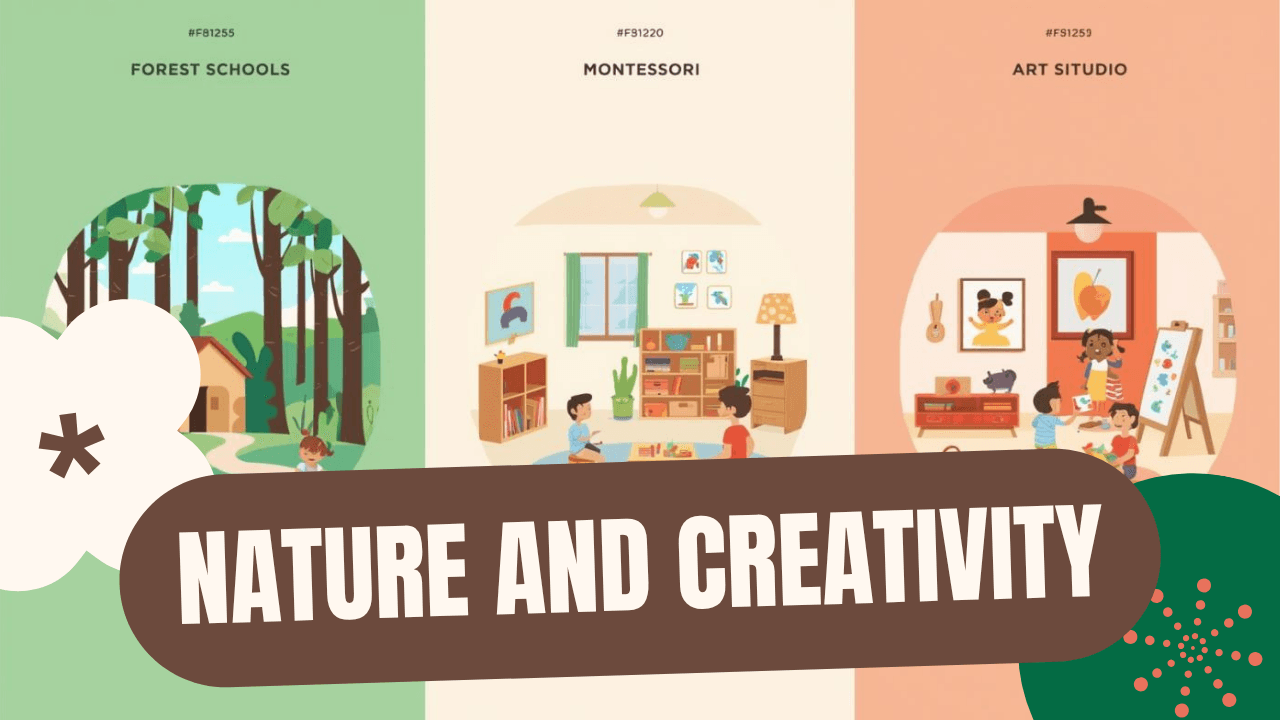
The Reggio Emilia approach views children as capable, curious learners who build knowledge through exploration and relationships. Developed in post-war Italy, it’s now used in nurseries worldwide — including a growing number of “Reggio-inspired” settings in the UK.
Here’s what the approach involves, how it aligns with EYFS, how it differs from Montessori, and what to look for if you’re considering a Reggio nursery.
What Is the Reggio Emilia Approach?
The Reggio Emilia approach is an educational philosophy that originated in the Italian city of Reggio Emilia after World War II. Founded by educator Loris Malaguzzi and parents in the community, it represents a radical departure from traditional teacher-led education.
At its heart, the approach views children as capable, curious individuals who actively construct their own knowledge through exploration, experimentation, and relationships. Rather than following a predetermined curriculum, learning emerges from children’s interests and questions, supported by skilled educators who observe, document, and extend thinking.
The approach is not a method with prescribed activities or materials. Instead, it’s a philosophy that guides how educators view children, learning environments, and the learning process itself.
Core Principles of the Reggio Emilia Approach
The Child as Capable and Competent
Reggio Emilia educators believe children are born with immense potential and curiosity. They’re viewed as active participants in their learning journey, capable of complex thinking and constructing knowledge through investigation. This stands in contrast to views of children as passive recipients of adult knowledge.
Practitioners support rather than direct learning, following children’s interests and providing materials and experiences that extend their thinking.
The Environment as the Third Teacher
In Reggio philosophy, the environment is considered the “third teacher” (alongside educators and peers). Thoughtfully designed spaces communicate values, provoke curiosity, and invite exploration.
Reggio environments typically feature:
- Natural light and natural materials (wood, clay, fabric, plants)
- Thoughtfully arranged learning areas that invite investigation
- Children’s work displayed at child height, often with documentation
- Mirrors and transparent materials that encourage perspective-taking
- Open-ended resources rather than single-use toys
- An atelier (creative studio) stocked with diverse art materials
The environment changes regularly based on children’s current interests and ongoing projects.
The Hundred Languages of Children
Malaguzzi spoke of children having “a hundred languages” — countless ways of thinking, expressing, and understanding the world beyond verbal language. These include drawing, sculpture, drama, movement, music, shadow play, light exploration, and construction.
Reggio nurseries provide rich opportunities for creative expression through diverse media. Rather than craft activities with predetermined outcomes, children explore materials freely and represent their thinking in multiple ways.
Project-Based Learning
Learning in Reggio settings often takes the form of in-depth, long-term projects that emerge from children’s questions and interests. A project might last weeks or months, allowing children to investigate topics deeply rather than moving quickly between unrelated activities.
For example, a child’s interest in shadows might evolve into a project exploring light, darkness, reflection, and transparency through experiments with overhead projectors, mirrors, light tables, and shadow puppets.
Educators support projects by listening closely to children, asking open-ended questions, providing relevant materials, and creating opportunities for investigation.
Documentation and Reflection
Documentation serves multiple purposes in Reggio settings. Educators carefully observe and record children’s words, actions, and creations through photographs, notes, and recordings. This documentation:
- Makes children’s thinking visible
- Helps educators understand children’s theories and interests
- Allows children to revisit and reflect on their learning
- Communicates learning to families
- Informs future planning
Documentation panels displayed in nurseries often tell the story of a project, showing how children’s thinking evolved over time.
Reggio Emilia Approach and EYFS: How They Align
You might wonder whether the Reggio Emilia approach fits with the UK’s statutory EYFS framework. The good news is that the philosophies align remarkably well, despite originating in different contexts.
Both frameworks:
- View children as active, capable learners
- Emphasise learning through play and exploration
- Recognise the importance of the environment in supporting learning
- Value child-initiated activity alongside adult-guided experiences
- Support holistic development across multiple areas
- Promote observation and assessment to inform practice
UK nurseries that follow Reggio principles integrate them within the EYFS framework. They meet all statutory requirements whilst adopting Reggio’s view of the child, approach to the environment, emphasis on creative expression, and documentation practices.
For example, a Reggio-inspired setting might frame EYFS areas of learning through project work, document learning journeys in the Reggio style whilst meeting EYFS assessment requirements, and use natural materials and provocations whilst covering required early learning goals.
What a Typical Day Looks Like in a Reggio Emilia Nursery
Whilst no two Reggio nurseries are identical, a typical day might include:
Morning exploration: Children arrive to carefully prepared environments with provocations — interesting materials or setups designed to spark curiosity. They might find a light table with coloured acetate, blocks with mirrors, clay with natural objects, or materials related to ongoing projects.
Small group projects: Educators work with small groups on ongoing investigations, asking questions, providing materials, and documenting thinking. This might involve experimenting with water flow, creating representations of a recent outing, or building collaborative structures.
Outdoor learning: Outdoor time is valued not just for physical play but for investigation. Children might observe seasonal changes, collect natural materials for creative work, or engage in large-scale construction.
Creative studio (atelier): Time in the atelier with diverse art materials allows children to express ideas, experiment with techniques, and represent their thinking. An atelierista (art specialist) might support this work.
Collaborative activities: Children work together on shared goals, learning to negotiate, solve problems, and build on each other’s ideas.
Documentation and reflection: Children might revisit photos or recordings of their work, discussing what they discovered and what questions remain.
The schedule remains flexible. If children are deeply engaged in an activity, educators allow time for concentration rather than cutting off learning for the next planned activity.
Reggio Emilia vs Montessori: Understanding the Differences
Both Reggio Emilia and Montessori are respected alternative approaches to early education, but they differ in significant ways:
Learning style: Reggio emphasises collaborative learning and social construction of knowledge, whilst Montessori focuses primarily on individual work and self-directed learning.
Curriculum: Reggio follows an emergent curriculum based on children’s interests with no predetermined path. Montessori uses a carefully sequenced curriculum with specific learning materials introduced in a particular order.
Materials: Reggio environments feature open-ended materials (loose parts, natural objects, art supplies) that can be used in countless ways. Montessori provides specially designed didactic materials with specific purposes and correct uses.
Teacher role: Reggio educators act as co-learners and researchers, guiding learning through questions and provocations. Montessori teachers are more observers and guides, introducing materials then stepping back.
Documentation: Reggio places enormous emphasis on documenting learning through photos, notes, and displayed work. Montessori focuses more on observation for assessment but less visible documentation.
Flexibility: Reggio is highly flexible and responsive to individual and group interests. Montessori follows a more prescribed method with less deviation.
Neither approach is inherently superior — they simply reflect different philosophies about how children learn best. Some families are drawn to Reggio’s collaborative, creative focus, whilst others prefer Montessori’s structured environment and emphasis on independence.
Benefits of the Reggio Emilia Approach for Children
Research and practitioner experience suggest several benefits of Reggio-inspired education:
Deep engagement: Following children’s interests leads to sustained attention and intrinsic motivation. When children investigate questions that genuinely interest them, they engage more deeply than with adult-imposed activities.
Creative thinking: The emphasis on diverse forms of expression and open-ended materials supports creativity, problem-solving, and divergent thinking.
Social skills: Collaborative projects develop cooperation, negotiation, perspective-taking, and communication skills. Children learn to build on each other’s ideas rather than working in isolation.
Critical thinking: Educators who ask open-ended questions and encourage investigation develop children’s ability to question, hypothesise, and test theories.
Positive self-image: Viewing children as capable and valuing their ideas builds confidence and a strong sense of self as a learner.
Love of learning: When education centres on curiosity and discovery rather than compliance, children develop positive attitudes toward learning that extend beyond early years.
Communication skills: Multiple forms of expression support language development whilst acknowledging that communication extends beyond words.
What to Look for in a Reggio Emilia Nursery
True Reggio Emilia nurseries are rare in the UK, but many settings describe themselves as “Reggio-inspired” — incorporating key principles whilst meeting UK requirements. When visiting potential nurseries, look for:
The physical environment: Observe whether spaces feel thoughtfully designed rather than cluttered. Look for natural materials, interesting provocations, children’s work displayed with documentation, good natural light, mirrors and transparent materials, and areas that invite different types of exploration.
Materials and resources: Check for open-ended materials that can be used in multiple ways rather than plastic toys with single purposes. Look for natural objects, loose parts, diverse art materials, light tables or overhead projectors, and materials that change based on current interests.
Children’s work: Notice whether displays showcase authentic children’s work (rather than adult-created templates), include documentation explaining the learning process, are positioned at child height, and tell stories of investigations over time.
Project work: Ask about current projects and how they emerged. Genuine Reggio practice shows long-term investigations based on children’s questions rather than adult-planned themes.
Educator philosophy: Speak with staff about their view of children, learning, and their role. Reggio-aligned educators describe themselves as co-learners and researchers, emphasise listening to children, and discuss following children’s interests.
Documentation practices: Look for evidence of learning stories, photos with explanatory text, children’s theories and questions recorded, and documentation shared with families.
Collaboration: Observe whether children work together on shared goals and whether the environment supports group work as well as individual exploration.
Finding a Reggio Emilia Nursery in the UK
Reggio Emilia is less established in the UK than in some countries, meaning pure Reggio settings are uncommon. However, many nurseries incorporate Reggio principles to varying degrees.
When searching for nurseries, look for settings that mention:
- Reggio Emilia or Reggio-inspired approach
- Child-led learning
- Project-based learning
- Learning environments as a teaching tool
- Documentation of learning
- Creative expression and the arts
You can filter searches on Good Nurseries by educational approach. Contact nurseries directly to ask about their philosophy and how they incorporate Reggio principles.
Consider visiting multiple settings to compare how different nurseries interpret and implement the approach. Some nurseries might call themselves Reggio-inspired with only surface-level adoption (like adding more natural materials), whilst others deeply embed the philosophy in their practice.
Is a Reggio Emilia Nursery Right for Your Child?
The Reggio Emilia approach appeals to families who value:
- Child-led, interest-based learning over structured lessons
- Creative expression and the arts
- Collaborative learning and social development
- Deep investigation over breadth of content
- Viewing children as capable and competent
- Strong relationships between educators, children, and families
It may be particularly well-suited to children who are curious, enjoy creative activities, thrive in collaborative environments, and benefit from following their interests deeply.
However, every child is different. Some children might thrive with the structure of Montessori, the outdoor focus of Forest School, or a more traditional EYFS setting. The best approach is the one that aligns with your values and meets your child’s individual needs.
When choosing a nursery, consider visiting several settings with different approaches. Observe how your child responds to the environment, talk with educators about their philosophy, and trust your instincts about where your child will flourish.
Conclusion
The Reggio Emilia approach offers a compelling vision of early childhood education grounded in respect for children’s capabilities, curiosity, and creative potential. Whilst pure Reggio nurseries remain rare in the UK, growing numbers of settings draw inspiration from this Italian philosophy, blending it with EYFS requirements to create learning environments that honour children’s questions, interests, and diverse ways of expressing understanding.
Whether you choose a Reggio-inspired setting or another approach, understanding these different educational philosophies helps you make informed decisions about your child’s early years experience. The right nursery is one that aligns with your values, meets your child’s needs, and creates a foundation for lifelong learning.
Frequently Asked Questions
- What is the Reggio Emilia approach?
- The Reggio Emilia approach is an educational philosophy that views children as capable, curious learners who construct knowledge through exploration and relationships. Developed in Italy after World War II, it emphasises child-led learning, the environment as a 'third teacher', creative expression through 'a hundred languages', and learning through long-term projects.
- How does the Reggio Emilia approach align with EYFS?
- The Reggio Emilia approach aligns strongly with EYFS principles. Both frameworks view children as active learners, emphasise learning through play, value the learning environment, support child-initiated activities, and promote holistic development. UK Reggio nurseries integrate Reggio principles whilst meeting all EYFS requirements and statutory frameworks.
- What is the difference between Reggio Emilia and Montessori?
- Reggio Emilia emphasises collaborative learning, emergent curriculum based on children's interests, creative expression through diverse materials, and extensive documentation. Montessori focuses on individual learning, prepared environments with specific materials, self-directed activities following a structured sequence, and minimal teacher intervention. Reggio is more flexible and community-focused, whilst Montessori follows prescribed methods.
- What does a typical day look like in a Reggio Emilia nursery?
- A Reggio day includes morning exploration time with varied materials, small group project work based on children's interests, outdoor learning and nature exploration, creative expression through art and construction, collaborative problem-solving activities, and documentation sessions where children reflect on learning. The schedule is flexible to allow for deep engagement when children are absorbed in activities.
- Are there many Reggio Emilia nurseries in the UK?
- Pure Reggio Emilia nurseries are relatively rare in the UK, but many settings describe themselves as 'Reggio-inspired' or incorporate Reggio principles alongside EYFS. These nurseries blend the Italian philosophy with UK statutory requirements. You can find Reggio-inspired settings by searching for nurseries that follow the Reggio Emilia approach on platforms like Good Nurseries.
- What should I look for when visiting a Reggio Emilia nursery?
- Look for thoughtfully arranged learning areas with natural materials, children's work displayed at child height with documentation panels, evidence of long-term projects, open-ended resources that encourage creativity, strong emphasis on light and natural materials, collaborative spaces for group work, and an atelier (creative studio). Ask staff how they incorporate children's interests into planning and how they document learning.
Related Tools
Related Articles
Forest School Nurseries: A Complete Guide for Parents (2026)
Everything you need to know about forest school nurseries in the UK — from EYFS alignment to what your child will learn outdoors. Find the right outdoor nursery.
Read moreMontessori Nurseries — What Parents Need to Know
What is a Montessori nursery? How the method works, what a typical day looks like, costs, and choosing the right Montessori setting.
Read moreSteiner Waldorf Nurseries: A Parent's Guide (2026)
Everything parents need to know about Steiner Waldorf nurseries in the UK — philosophy, daily routine, EYFS alignment, and how to choose the right one.
Read moreFind the Perfect Nursery
Search thousands of nurseries across England and Scotland, compare ratings, and read verified parent reviews.