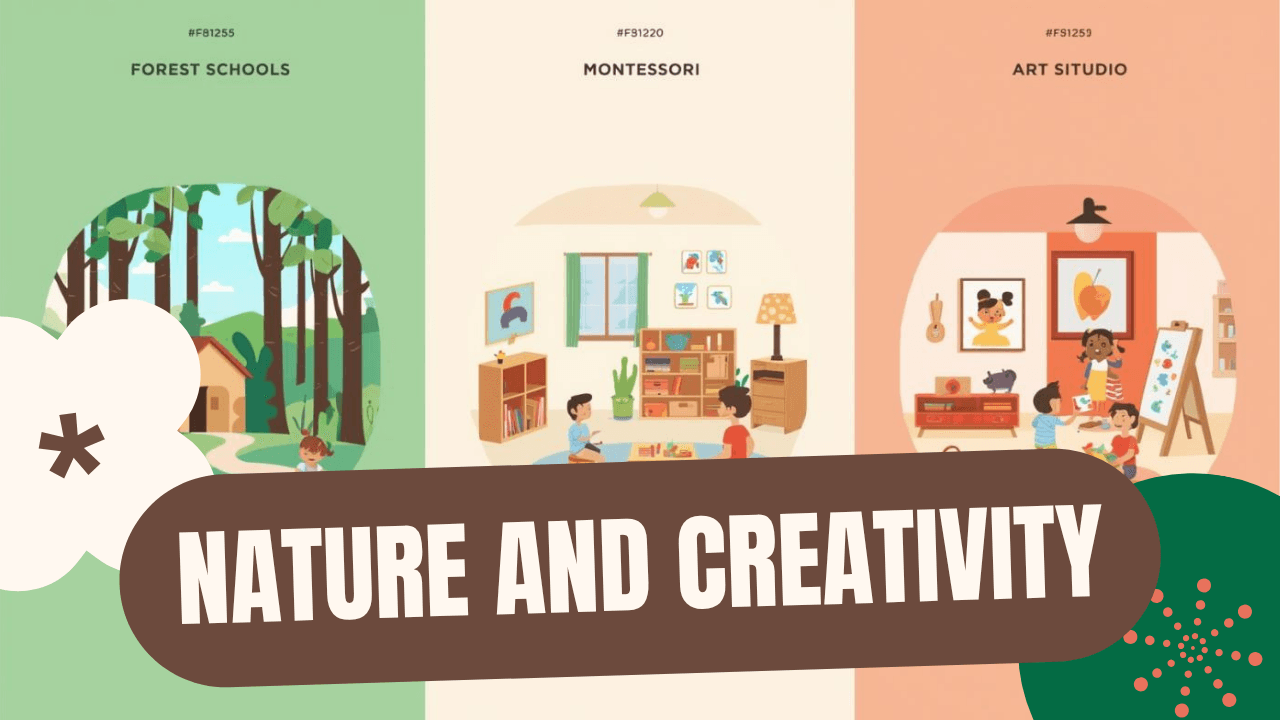
Choosing the right nursery for your child involves understanding different educational philosophies. Steiner Waldorf nurseries offer a distinctive approach to early childhood education, rooted in Rudolf Steiner’s principles of holistic child development. If you value creative play, natural materials, and screen-free learning, a Steiner nursery might align with your family’s values.
This guide explains what makes Waldorf education unique, how it works in practice, and whether a Steiner childcare setting is right for your child.
What is a Steiner Waldorf nursery?
A Steiner Waldorf nursery is an early years setting based on the educational philosophy of Rudolf Steiner, an Austrian philosopher who developed Waldorf pedagogy in the early 20th century. These nurseries focus on nurturing the whole child — head, heart, and hands — through imaginative play, artistic activities, and connection to nature.
Unlike conventional nurseries that may introduce early academics, Steiner settings protect childhood by delaying formal learning. Instead, children develop through:
- Creative play with open-ended natural materials (wood, wool, silk, clay)
- Artistic activities including painting, drawing, modelling, and crafts
- Storytelling and puppetry to develop language and imagination
- Seasonal rhythms aligned with nature’s cycles
- Practical domestic tasks like baking, gardening, and cleaning
- Outdoor play in natural environments, regardless of weather
The Steiner approach views early childhood (birth to age seven) as a time for imitation, sensory exploration, and building a strong foundation for later learning. Academic instruction is deferred until children show developmental readiness, typically around age six or seven.
Core principles of Waldorf education
Steiner Waldorf nurseries operate on several key principles that distinguish them from mainstream early years settings:
Rhythm and routine
Daily, weekly, and seasonal rhythms provide children with security and predictability. Each day follows a consistent pattern — free play, circle time, snack, outdoor play, story, rest — helping children feel grounded and calm. Weekly rhythms might include painting on Mondays, baking on Tuesdays, and crafts on Wednesdays. Seasonal festivals celebrate the changing year through songs, stories, and activities.
Creative play and imagination
Free play is central to Waldorf pedagogy. Children spend extended periods playing with simple, open-ended materials that encourage imagination. A wooden block becomes a phone, a boat, or a building brick. Silk scarves transform into capes, rivers, or baby slings. This type of play develops problem-solving, social skills, and creativity without prescribed outcomes.
Natural materials and environments
Steiner nurseries use natural materials — wood, wool, cotton, silk, beeswax, clay — rather than plastic toys. Classrooms feature soft colours (pinks, peaches, blues), natural light, and furnishings made from wood and natural fibres. Gardens and outdoor spaces are integral, with children spending significant time outside in all weather.
No screens or media
Waldorf education strictly avoids screens, television, computers, and electronic toys in early childhood. Practitioners believe young children need direct sensory experiences and human interaction, not mediated digital content. This extends to recommendations for home life, though enforcement varies by setting.
Oral storytelling and puppetry
Stories are told orally (not read from books) using simple language and repetition. Practitioners use seasonal tales, fairy stories, and nature stories to develop listening skills, language, and moral understanding. Puppet shows with handmade dolls bring stories to life, engaging children’s imagination without overstimulation.
Steiner approach and EYFS
Steiner Waldorf nurseries in England must comply with the Early Years Foundation Stage (EYFS) framework, which sets statutory learning and development requirements for all early years providers. Steiner settings achieve EYFS goals through Waldorf methods, demonstrating that creative play, storytelling, and practical activities support children’s progress across all seven areas of learning.
For example:
- Communication and language: Developed through oral storytelling, songs, finger rhymes, and conversation during domestic tasks
- Physical development: Supported by outdoor play, movement games, gardening, and practical activities like kneading dough
- Personal, social, and emotional development: Nurtured through imitation of adults, group activities, conflict resolution, and predictable routines
- Literacy: Emerges through rich oral language, storytelling, and environmental print, with formal reading instruction deferred
- Mathematics: Experienced through practical contexts (setting the table, sharing snacks, patterns in nature) rather than abstract concepts
- Understanding the world: Explored through nature observation, seasonal cycles, gardening, and cultural festivals
- Expressive arts and design: Central to Waldorf pedagogy via painting, drawing, music, crafts, and imaginative play
The Steiner Waldorf Schools Fellowship works with Ofsted to ensure member settings meet regulatory standards whilst maintaining pedagogical integrity. During inspections, practitioners demonstrate how their approach delivers EYFS outcomes through developmentally appropriate methods.
You can read more about the mainstream framework in our EYFS guide.
What a typical day looks like
A morning at a Steiner nursery might follow this rhythm:
8:30–9:30 Arrival and free play: Children arrive gradually, greeted warmly by practitioners. They engage in self-initiated play with natural materials — building with blocks, playing house in the home corner, or creating with beeswax crayons. Adults prepare for the day, modelling domestic tasks that children often imitate.
9:30–10:00 Circle time: The group gathers for songs, movement games, and finger rhymes. Activities change seasonally (harvest songs in autumn, snowflake rhymes in winter). Circle time builds community and helps children transition from free play to more structured activity.
10:00–10:30 Snack: Children wash hands, set the table with real crockery, and share a simple, wholesome snack (often baked that morning or the day before). Practitioners sit with children, modelling social skills and gratitude. Children help clean up afterwards.
10:30–11:30 Outdoor play: Rain or shine, children dress appropriately and spend time outdoors — digging, climbing, building, exploring puddles, or tending the garden. Practitioners support but don’t direct, allowing children to follow their interests.
11:30–11:50 Story and quiet time: The group settles for an oral story, often told with simple gestures or puppets. Children rest quietly on mats or cushions, transitioning towards pick-up time.
12:00 Home time or lunch: Morning sessions end, or children stay for lunch and afternoon rest if attending full-day care.
Steiner vs Montessori vs mainstream
Parents often compare Steiner nurseries with Montessori settings and conventional EYFS-led nurseries. Here’s how they differ:
| Aspect | Steiner Waldorf | Montessori | Mainstream EYFS |
|---|---|---|---|
| Play approach | Imaginative, open-ended play with natural materials | Self-directed work with structured materials | Mix of free play and adult-led activities |
| Early academics | Delayed until age 6–7 | Introduced earlier through hands-on materials | Varies; some introduce phonics and numeracy at 3–4 |
| Adult role | Nurturing guide, models domestic tasks | Observer, prepares environment | Active facilitator, teaches directly |
| Materials | Natural, simple, open-ended (wood, silk, clay) | Specific Montessori apparatus (pink tower, number rods) | Mix of natural and commercial educational toys |
| Group activities | Central (circle time, festivals, shared rhythm) | Less emphasis; focus on individual work | Balanced group and individual time |
| Technology | Strictly avoided | Minimal in early years | Increasingly integrated (tablets, interactive whiteboards) |
| Philosophy | Holistic, spiritual, rhythm-based | Independence, order, practical life skills | Broad, inclusive, outcomes-focused |
Steiner and Montessori share respect for child development and hands-on learning but differ significantly in execution. Montessori emphasises independence and self-correction through structured materials; Steiner prioritises imagination and community through creative play. You can explore the differences in more detail in our Montessori nurseries guide.
Mainstream nurseries vary widely but generally balance play-based learning with school readiness activities, reflecting EYFS goals and parental expectations.
Benefits and considerations
Benefits of Steiner nurseries
Strong imagination and creativity: The emphasis on open-ended play and storytelling nurtures imaginative thinking, problem-solving, and creative expression — skills increasingly valued in modern education and work.
Screen-free environment: In a world dominated by digital media, Steiner settings offer children a rare opportunity to develop without screens, supporting attention span, sleep quality, and direct social interaction.
Connection to nature: Regular outdoor play and seasonal activities foster environmental awareness, physical health, and resilience. Children learn to appreciate nature’s rhythms and their place within the natural world.
Holistic development: By addressing emotional, social, physical, and cognitive growth equally, Steiner nurseries aim to develop well-rounded individuals rather than prioritising academic milestones.
Calm, predictable environment: Daily and seasonal rhythms create a sense of security. Children know what to expect, reducing anxiety and behavioural challenges.
Considerations
Delayed academics: Some parents worry that deferring formal learning may disadvantage children when they enter mainstream primary schools. Research on Waldorf graduates shows mixed results; some transition smoothly, whilst others need time to catch up academically (though they often excel in creativity and social skills).
Philosophical underpinnings: Steiner education is rooted in anthroposophy, a spiritual philosophy developed by Rudolf Steiner. Whilst most UK nurseries focus on pedagogical practices rather than spiritual teachings, some parents feel uncomfortable with this background.
Limited availability: Steiner Waldorf nurseries are less common than Montessori or mainstream settings, particularly outside cities. Families may face longer commutes or waiting lists.
Home-school alignment: Steiner nurseries often recommend limiting screens and commercial toys at home. Families who don’t share these values may find inconsistency between nursery and home life.
Cost: Steiner nurseries can be more expensive than local authority or chain nurseries, though many accept government-funded hours. Always check pricing and funding options with individual settings.
What to look for when choosing a Steiner nursery
If you’re considering Steiner childcare, visit potential settings and observe:
Practitioner warmth and consistency: Steiner educators should be calm, nurturing, and present. Ideally, the same practitioner stays with a group for multiple years, providing continuity and deep relationships.
Environment and materials: Look for natural materials, soft colours, and minimal plastic. Toys should be simple and open-ended. Outdoor space should be accessible and well-used.
Daily rhythm: Ask about the daily, weekly, and seasonal rhythms. A well-run Steiner nursery has a predictable structure that children can rely on.
EYFS integration: Ensure the setting is Ofsted-registered and demonstrates how Waldorf methods deliver EYFS outcomes. Ask how they track children’s progress and communicate with parents.
Community and festivals: Steiner settings often involve families in seasonal festivals and celebrations. Consider whether this community aspect appeals to you.
Transition planning: If your child will eventually attend a mainstream primary school, ask how the nursery prepares children for this transition. Do they introduce early literacy and numeracy skills in the final year?
For broader guidance on choosing any nursery, read our article on how to choose a nursery.
Finding a Steiner nursery in the UK
The Steiner Waldorf Schools Fellowship represents Waldorf education in the UK and Ireland. Their website lists accredited settings, though not all Steiner-inspired nurseries are members.
You can also search for Steiner nurseries through local authority directories or our UK nursery search tool, which includes settings following Waldorf pedagogy. When searching, look for keywords like “Steiner”, “Waldorf”, “kindergarten”, or “anthroposophical” in nursery descriptions.
Other alternative approaches worth exploring include forest school nurseries, which share Steiner’s emphasis on outdoor learning and natural materials, and Reggio Emilia nurseries, which also prioritise creative expression and child-led learning.
Is a Steiner nursery right for your child?
Steiner Waldorf nurseries offer a distinctive, holistic approach to early childhood education. They suit families who:
- Value imagination, creativity, and screen-free childcare
- Appreciate natural materials and outdoor learning
- Want a calm, predictable environment with strong rhythms
- Are comfortable deferring formal academics until school age
- Seek a community-oriented setting with family involvement
They may not suit families who:
- Prioritise early academic preparation
- Prefer highly structured, goal-oriented learning environments
- Are uncomfortable with the spiritual origins of Waldorf education
- Need extended hours or wraparound care (many Steiner nurseries offer shorter sessions)
- Want a setting closely aligned with mainstream primary school expectations
Ultimately, the best nursery is one that aligns with your values and supports your child’s individual needs. Visit multiple settings, ask questions, and trust your instincts. Whether you choose Steiner, Montessori, forest school, or a conventional nursery, what matters most is a warm, responsive environment where your child feels safe, valued, and excited to learn.
Frequently Asked Questions
- What is a Steiner Waldorf nursery?
- A Steiner Waldorf nursery is an early years setting based on Rudolf Steiner's educational philosophy, emphasising creative play, natural rhythms, and hands-on learning with natural materials. These nurseries avoid screens and academic pressure, focusing instead on imagination, social skills, and holistic child development through storytelling, arts, crafts, and outdoor play.
- Do Steiner nurseries follow EYFS?
- Yes, Steiner Waldorf nurseries in England follow the Early Years Foundation Stage (EYFS) framework. They meet all statutory requirements whilst delivering the curriculum through Waldorf pedagogy — using creative play, natural materials, and rhythm-based routines to achieve EYFS learning goals in a developmentally appropriate way.
- What is the difference between Steiner and Montessori?
- Steiner nurseries focus on imagination, creative play, and group activities with natural materials, delaying formal learning until age seven. Montessori nurseries emphasise independence, self-directed learning with structured materials, and early introduction of practical life skills. Steiner follows seasonal rhythms and oral storytelling; Montessori uses prepared environments and child-led exploration.
- Are Steiner nurseries suitable for all children?
- Steiner nurseries suit children who thrive in creative, imaginative environments with predictable routines. They work well for families who value screen-free childcare, nature-based learning, and holistic development. However, parents seeking early academic preparation or those uncomfortable with the spiritual aspects of Steiner philosophy may prefer alternative approaches like Montessori or EYFS-led settings.
- How much does a Steiner nursery cost?
- Steiner Waldorf nurseries typically charge £40–£80 per day, depending on location and session length. Many accept government-funded hours (15 or 30 hours for eligible families). Some operate as charities or community organisations with sliding scale fees. Always check with individual settings for current pricing and funding eligibility.
- What age do children start at a Steiner nursery?
- Most Steiner Waldorf nurseries accept children from age two or three, though some offer parent-and-child groups for younger toddlers. The kindergarten phase typically covers ages 3–6, with children transitioning to Steiner schools or mainstream primary education around age six or seven, depending on the child's readiness.
Related Tools
Related Articles
Forest School Nurseries: A Complete Guide for Parents (2026)
Everything you need to know about forest school nurseries in the UK — from EYFS alignment to what your child will learn outdoors. Find the right outdoor nursery.
Read moreMontessori Nurseries — What Parents Need to Know
What is a Montessori nursery? How the method works, what a typical day looks like, costs, and choosing the right Montessori setting.
Read moreReggio Emilia Approach: A Parent's Guide to Reggio Emilia Nurseries (2026)
Discover the Reggio Emilia approach and how it differs from traditional nurseries. Learn about core principles, EYFS alignment, and finding Reggio nurseries in the UK.
Read moreFind the Perfect Nursery
Search thousands of nurseries across England and Scotland, compare ratings, and read verified parent reviews.